

John says, “All things were made through Him” (John 1:3).
Paul says creation exists “through Him and for Him” (Colossians 1:16).
And then the world looked at Him and said, “Is not this the carpenter?” (Mark 6:3).
Let that sink in.
Jesus is not distant from real life. He is not a “spiritual elite” floating above ordinary people. He stepped into ordinary life on purpose. He is recorded as a working man with calloused hands. The King of Kings worked with wood and tools. He lived in quiet faithfulness. He obeyed perfectly. He went all the way to death on a cross (Philippians 2:8). He was tempted like us, yet without sin (Hebrews 4:15).
So What Does That Say About Work?
First, Jesus never gives a weekly hour limit. But He does reveal the purpose of work, and it starts in Genesis.
Work was given before sin
Genesis is narrative. It is telling us what God designed, not just what happened.
Before the fall, God placed Adam in the garden “to work it and keep it” (Genesis 2:15). Work was not a curse. Work was a gift inside relationship. Adam’s assignment flowed out of being with God.
I see this with my daughters.
When I give them an assignment, I speak to how God wired them. One needs clear tasks and a time limit. Another needs music and a fun challenge, and then she stuffs things where they do not go.
But they both do the same thing when they finish. They run to mom and dad and say, “LOOK!”
That is a picture of the garden. Work is meant to rise out of love and return in love. Not to earn a father, but to please the Father.
And that is why Paul can say, “Whatever you do, work heartily, as for the Lord and not for men” (Colossians 3:23). Not because work saves you, but because Jesus has you.
Question 1: Are you working from love, with a desire to please the Father?
Jesus gets very direct about work and money
“You cannot serve God and money” (Matthew 6:24).
Jesus is not anti-work. He is anti-idolatry. Money can become a master. Work can become a false god.
He presses the question that our hustle avoids.
“What does it profit a man to gain the whole world and forfeit his soul?” (Mark 8:36)
Question 2: Is your work bolstering your identity, or pointing back to the Father?
Doesn’t He care that I am working hard?
Yes. He cares. He sees the bills. He sees the pressure. He sees the single mom trying to hold it all together. He sees the man carrying the weight of responsibility. He is not shaming provision.
But He does put guardrails around hard work because He loves you.
In Matthew 6:25–34, Jesus speaks to the treadmill of worry about provision, status, and tomorrow. He calls us back to the Father’s care.
When the disciples asked Jesus how to pray, He taught daily bread. Not daily trophies. Not daily proof that you matter.
And the wilderness story foreshadowed this.
In Exodus, God gave manna and commanded His people to gather enough for the day (Exodus 16:4, 16–20). If they stockpiled, it rotted. God was not being harsh. He was training their hearts.
Manna from heaven (Exodus 16).
Water from the rock (Exodus 17:6).
And all of it points forward.
Jesus says, “I am the bread of life” (John 6:35).
He says the one who comes to Him will not thirst like before (John 4:14).
Question 3: Are you controlling your life by providing, or are you walking with the Provider?
Sabbath is not weakness; it is love
Jesus says, “The Sabbath was made for man, not man for the Sabbath” (Mark 2:27).
Sabbath is a gift. It is a declaration that you are not God.
And Jesus lived what He taught.
“He would withdraw to desolate places and pray” (Luke 5:16).
He told His disciples, “Come away by yourselves to a desolate place and rest a while” (Mark 6:31).
So if your schedule never lets you be present with God and present with your family, Jesus would not congratulate the hustle. He would call you back to a human pace under the Father.
This is not a call to laziness. This is a call to ordered love.
Question 4: What is first right now: work, family, or Him?
One more thing, and this is everything
If you are in Christ, your identity is not earned. It is received.
The gospel is not “work harder and God will love you.” The gospel is that Jesus lived the life you could not live, died the death you deserved, and rose again. By grace alone, through faith alone, in Christ alone, you are forgiven, adopted, and secure (Ephesians 2:8–9). That changes why you work.
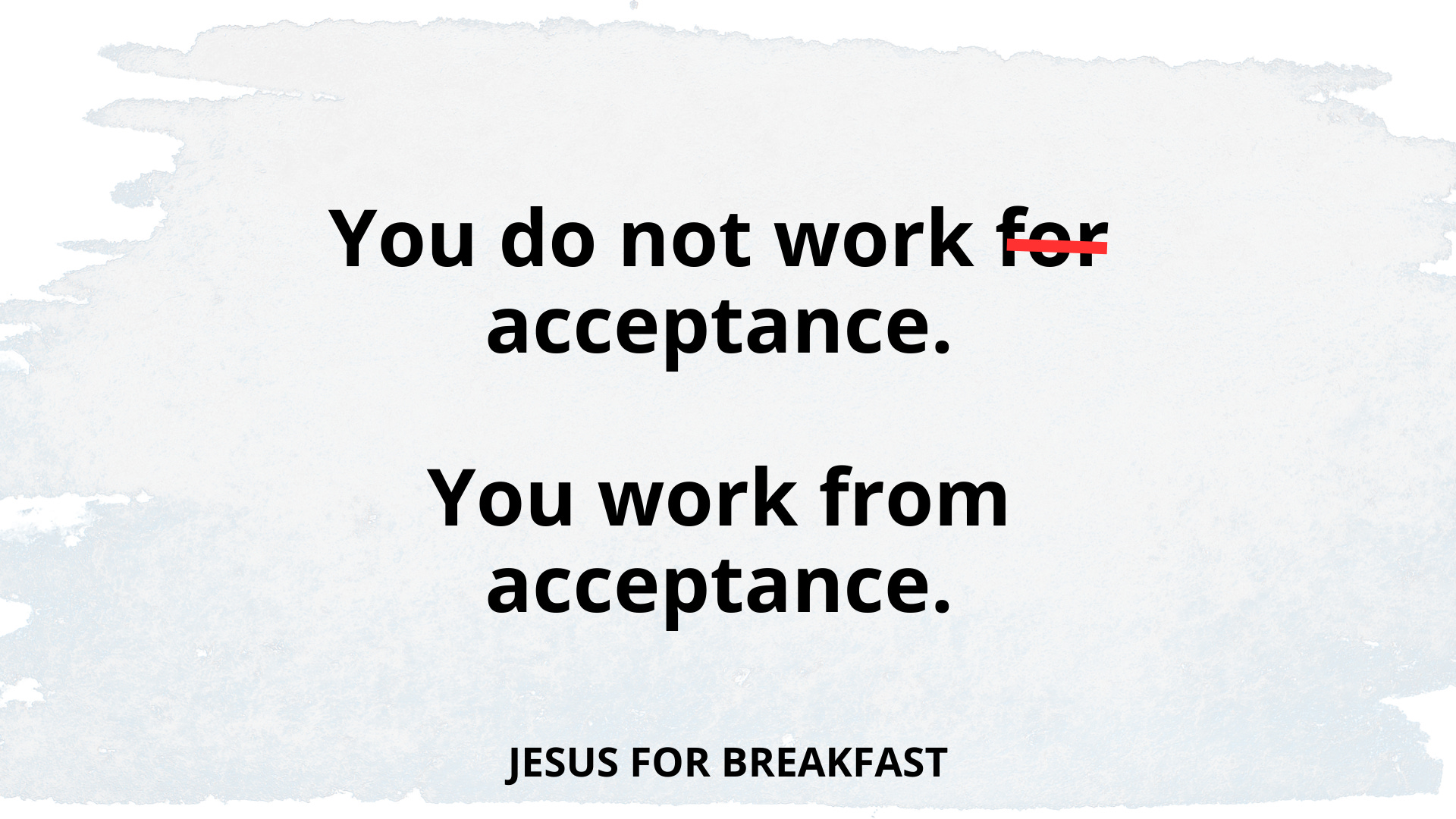
You do not work for acceptance. You work from acceptance.
So what would Jesus say about work?
I cannot put words in His mouth like I have a private recording. But from His Word and His life, here is the direction I might suggest He gives.
Work is a good gift from My Father, given before sin.
Work is a place of stewarding My Father’s world with love.
Work is not your master, because you belong to the true Master.
Do not trade your soul for a paycheck.
Abide in Me, and your labor will bear fruit that lasts (John 15:5).
Never Finished Challenge: BE
Go and be.
Be His son or daughter.
Be His vessel.
Be His friend.
Be His.
How?
You cannot live what you do not know.
Read His Word daily and ask, What does this show me about God, His nature, and His ways? As your relationship strengthens, your identity strengthens. And clarity comes.
Your calling is not a mystery.
Love God and love others (Matthew 22:37–39).
Glorify God in all things (1 Corinthians 10:31).
Be sanctified (1 Thessalonians 4:3).
Make disciples (Matthew 28:18–20).
What Does Today Say About God?
“The earth is the Lord’s and the fullness thereof, the world and those who dwell therein” (Psalm 24:1).
He is Adonai, Master and Lord.
A prayer for you
Father, Adonai, today is Yours. The earth is Yours and everything in it. My breath is sustained by You. Teach me to number my days (Psalm 90:12). Set my life in order. You first, then everything else. Free me from serving money. Teach me to work from love, not fear. Help me abide in Jesus, because apart from Him I can do nothing. I love You. In Jesus’ name, amen.
What a Father.
What a King.
What a Friend.
Thank You, Jesus.