


There I stood, worshiping with about 70 people in God’s beloved church.
And then I wondered.
What if the Holy Spirit came raining down on us?
What if revival broke out?
What if someone was miraculously healed?
What if something happened so incredible that it was as if Jesus were standing right in front of us?
God can do it after all! I’ve read about it all through Scripture.
So I waited.
And I prayed a bold prayer.
Lord, You can do anything You wish. Would You move among us in a mighty way?
As we continued worshiping, nothing happened.
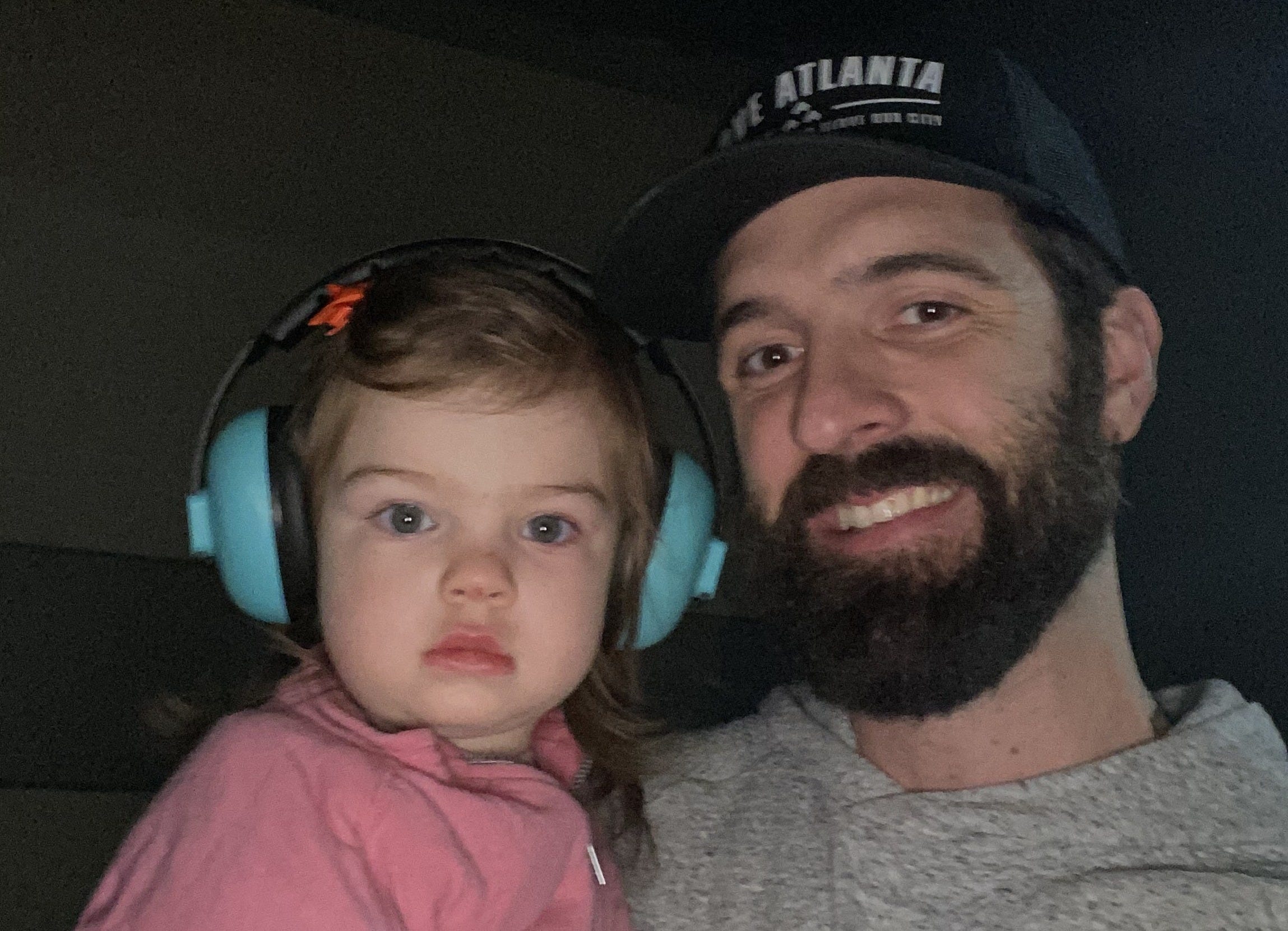
So I kept worshiping with my three-and-a-half-year-old daughter in my arms. As I worshiped, God brought my attention to the little girl in my arms.
My daughter.
I was looking for an extraordinary miracle. Instead, God brought my attention to the miracles right in front of me and the extraordinary God I get to worship.
Sometimes, we long to see the dead raised to life. We pray for someone with stage-four cancer to be radically healed. We want God to part the waters right before our eyes.
And there’s nothing wrong with asking God for the miraculous.
Pray boldly!
Our God can do far more than we can ask or imagine (Ephesians 3:20).
But sometimes, I wonder if we’re so focused on the extraordinary things we want God to do that we’re overlooking the ordinary—and extraordinary—things He’s already called us to.
What if the miracle you’re waiting for is closer than you think?
And what if the next step isn’t something extraordinary?
What if it’s simply obedience?
A Loincloth? Really?
Recently, I was reading Jeremiah 13. And of all things, a linen loincloth caught my attention. Yes, a loincloth. Let me give you some context.
God’s people had repeatedly rebelled against Him. They worshiped idols, followed their stubborn hearts, and refused to listen to His Word. These were the very people God had graciously chosen to be His own. He had rescued them, provided for them, and patiently warned them. Yet they continued turning away.
So God sent Jeremiah to speak His Word to a rebellious nation facing judgment. And in chapter 13, God gives Jeremiah what seems like a rather unusual assignment. Go buy a linen loincloth.
If I were Jeremiah, I might have said, “Lord, I’ve got plenty sitting in my closet. What about those?” But Jeremiah doesn’t argue. At least, the passage doesn’t record him arguing.
He simply obeys.
He buys the loincloth and puts it around his waist, just as God commanded.
Then the Word of the Lord comes to him again. God tells Jeremiah to take that loincloth, go to the Euphrates, and hide it in a cleft of the rock. Now, to me, this story is already bizarre.
But Jeremiah obeys. He goes. Hides it. And he leaves it there.
Many days pass. Then the Lord speaks again. He tells him to go back and get the loincloth (I would have forgotten about that thing).
So Jeremiah obeys, returning to where he buried it, digs it out, and finds it ruined. Good for nothing. And then comes the explanation.
God tells Jeremiah that just as the loincloth was ruined, so He would ruin the pride of Judah and Jerusalem. These people had refused to hear His words. They had followed their own stubborn hearts and worshiped other gods.
But verse 11 was what really stood out to me. God says that just as the loincloth clings to a man’s waist, He had made Israel and Judah cling to Him.
Why?
So they would be His people.
A name.
A praise.
A glory.
And then came this difficult truth.
“But they would not listen.” (Jeremiah 13:11)
Think about that. God had called this nation into a close covenant relationship with Himself. They were meant to cling to Him. To know Him. To worship Him. To bring Him glory.
But they would not listen.
And this wasn’t because God had failed to love them. In the previous chapter, God refers to His people as “the beloved of my soul” (Jeremiah 12:7). What extraordinary language. The beloved of His soul.
Yet these same people continued rejecting Him. And now judgment was coming. But even here, we see God revealing His character.
He is holy.
He is just.
He does not overlook evil.
And He had patiently sent His Word through His prophets, warning His people of the consequences of their rebellion.
Even a ruined loincloth became a vivid message to a nation that refused to listen.
What About the Small Things?
Now, I want to be careful here. Context matters.
The main point of Jeremiah 13 isn’t that we should obey God in small things. It’s a serious warning about a people who were meant to belong closely to God but refused to hear His Word.
Yet something else stood out to me as I read. Jeremiah’s obedience. Think about it. God tells him to buy a loincloth. He obeys. God tells him to hide it. He obeys. After many days, God tells him to retrieve it. Again, he obeys.
We aren’t told everything Jeremiah thought during this process. But we are told what he did. And I couldn’t help but wonder.
How many times have I dismissed something because it seemed too insignificant?
How often do we want God to give us some grand assignment, a spectacular miracle, or an unmistakable experience while overlooking the responsibilities He’s already placed before us?
We want the extraordinary. The exciting. The kind of testimony that makes everyone stop and listen.
But what about the kitchen?
What about the child asking for our attention?
What about the person we need to forgive?
What about keeping our word when nobody’s watching?
What about simply doing what Scripture has already told us to do?
Over the past two years, I can tell you this has been a real struggle for me.
There have been times when I’d rather sit down and produce another article or work on ministry than clean the kitchen or living room.
And I can make a pretty convincing argument for why.
After all, I’m writing about Jesus!
I’m trying to help people go all in with Jesus every day.
Surely that’s more important than cleaning a kitchen.
Right?
But I’ve had to wrestle with that.
Because sometimes the work I want to do for God distracts me from the people He’s already called me to love.
My wife doesn’t just need another article from me.
My daughters don’t just need a father who tells other people about Jesus.
They need a husband and father who follows Jesus at home.
Who serves.
Who listens.
Who keeps his word.
Who loves them when nobody else is watching.
And I’ll tell you something.
I’ve never regretted those quiet moments of faithful obedience.
But I have certainly regretted the times I neglected them.
Sometimes what I consider insignificant is exactly what God is calling me to steward with Him.
The Little Things Aren’t Always Little
I’ve been thinking about this with my children, too. When they’re little, so much of life seems insignificant from an adult’s perspective. Putting away toys. Saying thank you. Helping clean up. Listening when Daddy or Mommy calls. Learning to tell the truth. Little things.
Right?
But are they really?
As parents, we’re not merely trying to get our children to follow instructions.
We’re helping them grow. Teaching them to trust. Teaching them to love. Teaching them that their choices affect the people around them.
A child who learns to tell the truth about a broken toy is practicing honesty. A child who helps clean up after playing is learning to serve.
And every time we patiently instruct, forgive, encourage, and love them, we have an opportunity to build trust.
These moments aren’t simply about getting things done. They’re part of a much greater process of formation. And that made me think about our relationship with God.
Now, God isn’t simply a larger version of an earthly parent. He is perfectly holy, perfectly wise, and perfectly loving. But Scripture does describe Him as our Father. And as His children, we’re called to trust Him.
Not just when His instructions make sense to us. Not just when obedience feels exciting. And not just when we believe something spectacular might happen afterward. We obey because He is good.
Because He is wise.
Because He loves us.
And because, through Jesus, we belong to Him.
Just as a child is already loved before learning to obey, our obedience doesn’t earn our place in God’s family.
It flows from the grace we’ve received. And as we walk with Him, His Spirit continues shaping us into the likeness of Jesus.
Not every act of obedience leads to an extraordinary experience.
Sometimes the kitchen simply gets clean.
Sometimes forgiveness is difficult.
Sometimes the work is tiring, and nobody notices.
But none of that makes faithfulness meaningless.
The Greater Miracle of Grace
And this brings me back to Jeremiah. God had graciously chosen His people. He had called them to belong closely to Him. But they would not listen.
And I couldn’t help but think about the cross.
Because centuries later, Jesus Christ came into this world.
The sinless Son of God lived the life we could never live. He bore the punishment our sins deserved. He died on the cross. And He rose again.
Through faith in Him, sinners like you and me can be forgiven, reconciled to God, and welcomed into His family.
Not because we’ve obeyed perfectly.
Not because we’ve accomplished anything impressive.
Not because we’ve done enough religious things.
But because of His extraordinary grace.
And if you are in Christ, think about what that means. You belong to Him. You’ve been brought near. You’ve received a gift you could never earn.
So why would we treat that grace casually?
Why would we cling so tightly to the things of this world while neglecting the One who gave Himself for us?
Paul asks a similar question in Romans 6. Should we continue in sin so that grace may increase?
Absolutely not.
Grace is not permission to continue living as though we don’t know Jesus. His grace saves us, and His Spirit transforms us.
And Jesus tells His disciples in John 15 to abide in Him.
To remain close.
To bear fruit through their relationship with Him.
Not apart from Him.
And I think this is where our desire for the extraordinary can sometimes lead us astray.
We can become so captivated by what God might do through us that we neglect the daily privilege of walking with Him.
We can want the fruit while neglecting the Vine.
We can want another assignment while overlooking the one He’s already given us.
We can want everyone to see Jesus through our ministry while forgetting that our children are watching how we follow Him at home.
God reminded me that day of the miraculous gift He gave me. I held this miraculous gift and almost missed it.
But because of His endless grace, I didn’t and was reminded that not only was I holding this gift, but I was also exemplifying the gift of Jesus in my heart through the act of worship.
And they were watching.
Alongside my two other miracles and my wife.
So, in this season, I don’t have a massive following, a church, or an exploding ministry, but I have been trusted to steward and shepherd an incredible wife and four amazing daughters with Him.
And that assignment is miraculous in and of itself.
Never Finished Challenge: Listen and Obey
This week, I want to encourage you to do something simple. Open God’s Word. Daily. If you’re new to reading the Bible, begin with the Gospel of John.
Before you read, pray: “Father, show me who You are. Help me understand Your Word, love You more deeply, and faithfully respond.”
Then read.
Slowly.
Ask what the passage reveals about God’s character and what it meant to the original audience.
Consider how it connects to the larger story of Scripture and ultimately to Jesus.
When something stands out, write it down.
Study the surrounding passage. Then, use a trustworthy commentary to understand its meaning.
Finally, ask God to help you respond faithfully to what you learned.
Perhaps there is a sin to confess. A person to forgive. A responsibility you’ve been neglecting.
Or a simple opportunity to love someone right in front of you.
Don’t wait for an extraordinary experience before obeying what God has already made clear.
And don’t confuse every personal impression with God’s voice. Test what you believe against Scripture, seek wisdom, and follow what is true.
As you spend time with Jesus, His Word will shape your understanding, His Spirit will continue His work in you, and you will learn to trust Him more deeply.
Sometimes your prayers will be answered in ways that leave you amazed.
Sometimes you’ll have to wait.
And sometimes the answer won’t look anything like what you hoped.
But God remains worthy of your worship.
The sons of Korah wrote:
“For a day in your courts is better than a thousand elsewhere.” (Psalm 84:10)
So where are you dwelling today?
What has captured your attention?
And is there something God has already called you to do that you’ve been treating as insignificant?
Pray boldly.
Dream with open hands.
Ask God for the impossible.
But don’t overlook the wonderful privilege of walking with Him today.
The goal isn’t simply to see God do something extraordinary. It’s to know, love, and obey the extraordinary God who has graciously brought us near through Jesus.
Receive His grace.
Never finished.
Choose Jesus.
Have Jesus for breakfast.