

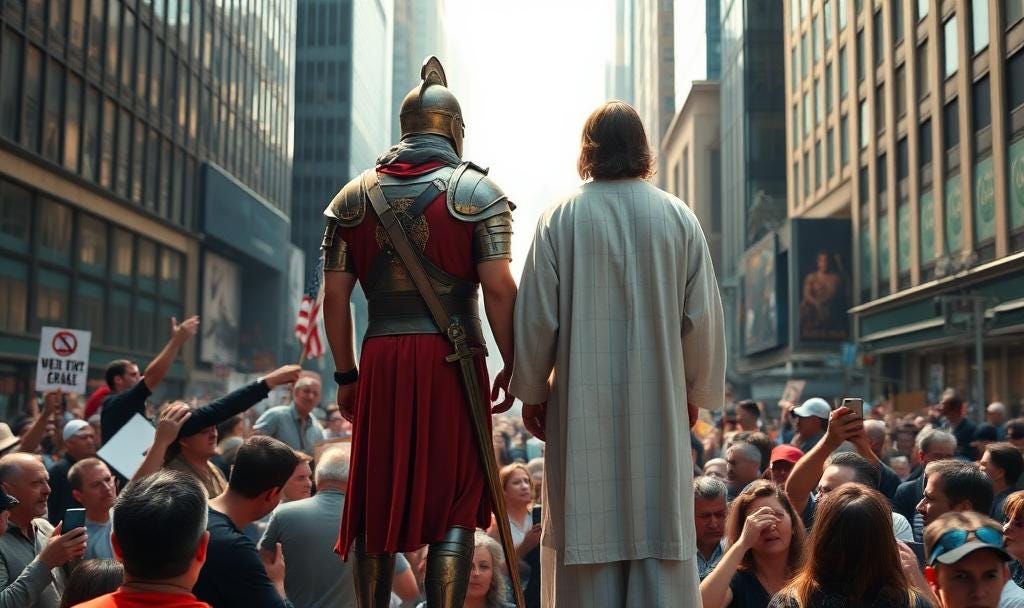
When life feels like dark, impossible, or difficult beyond measure, where do you run?
David didn’t just survive his battles—he worshiped through them. In Psalm 18:2, he doesn’t describe God in vague or distant terms. He reaches for the most vivid metaphors he knows. Because for David, God wasn’t theoretical or distant. He was personal, as closer than the armor or close that rest on his body.
Psalm 18:2 (NIV)
“The Lord is my rock, my fortress and my deliverer;
my God is my rock, in whom I take refuge,
my shield and the horn of my salvation, my stronghold.”
This is David pouring out praise after being delivered from his enemies, including Saul. But he doesn’t just say, “Thank you, God.” He paints a portrait of God using language from the battlefield—images of survival, rescue, and defense.
I enjoyed unpacking what each metaphor meant and what it means for us today.
1. “My Rock”
When everything shakes, God is unmovable.
In the ancient world, a rock wasn’t a pebble—it was a massive, immovable place of refuge. Caves and cliffs were often used as natural fortresses. David literally hid in the rocky wilderness while fleeing Saul (see 1 Samuel 23).
“You are my safe place when everything around me is falling apart.”
Modern-day:
When life feels unstable—emotionally, financially, relationally—God remains steady.
→ He is your anchor. He is unshakable. (Hebrews 13:8)
2. “My Fortress”
A fortified defense when the battle rages.
A fortress was a high, well-defended structure, designed to be nearly impossible to conquer. As a warrior, David knew the value of strong defenses.
“You don’t just hide me—you secure me.”
Modern-day:
In spiritual warfare, anxiety, depression, or overwhelming pressure, God doesn’t just shield you.
→ He fortifies you with His presence and surrounds you with His peace.
3. “My Deliverer”
The One who pulls you out of what should’ve destroyed you.
To “deliver” is to rescue from danger, sometimes miraculously. David had many moments when death was close.
“I didn’t escape by skill—I was rescued by grace.”
Modern-day:
Whether you’ve faced addiction, fear, shame, trauma, or failure—
→ God is the One who steps in and lifts you out, even when you don’t realize it.
4. “My God is my rock, in whom I take refuge”
A trust that’s chosen, not assumed.
David reuses the image of “rock,” but adds this time that he takes refuge in God. This is active, not passive.
“I don’t just believe in You, I run to You.”
Modern-day:
You can believe God is strong and still try to fix things yourself.
→ Refuge means surrender. It means choosing prayer over panic, worship over worry.
5. “My Shield”
God doesn’t just provide protection—He becomes it.
In battle, shields weren’t symbolic. They saved lives. They absorbed arrows that would’ve killed. David’s language here is powerful:
“God doesn’t just give me a shield, He steps in front of the attack.”
Modern-day:
When you feel spiritually under fire—lies, accusations, fear, failure—
→ God Himself absorbs the blow. He is the One between you and the enemy.
“You, Lord, are a shield around me, my glory, the One who lifts my head high.” (Psalm 3:3)
6. “The Horn of My Salvation”
A symbol of strength, victory, and triumph.
In Scripture, the horn represents power and dominion, like a ram raising its horn in victory. It’s also prophetic:
“He has raised up a horn of salvation for us...” (Luke 1:69)
“David knew the strength of victory. Jesus became that strength for us.”
Modern-day:
Jesus didn’t just win a battle—He crushed the ultimate enemy: sin and death.
→ He gives you real victory. Not just over enemies, but over shame, despair, and fear.
7. “My Stronghold”
A place above the chaos where your soul can breathe.
A stronghold is a high refuge—a secure place above the battlefield where you can rest, observe, and recover.
“God lifts me above it all—not always out of it, but above it.”
Modern-day:
You may not get removed from the trial. But you can gain clarity, peace, and spiritual vision.
→ God gives you high ground. The battle may still rage—but your soul is steady.
So How Can We See God Like David Did?
1. Remember What God Has Done.
David wrote this after deliverance. He looked back on every moment of God’s rescue and named it.
→ Gratitude grows clarity and endurance.
2. Use Personal Metaphors.
David described God with terms from his life. So can you.
What would it sound like if you called God your Coach? Your Counsilor? Your Firefighter? Your Father?
3. Run to God Often—Not Just in Crisis.
David cultivated closeness with God in the fields before the battlefield.
A refuge isn’t just for emergencies. It’s for every day.
✍️ Never Finished Challenge: Write Your Own Psalm 18:2
Take 2 minutes. Write 3–5 things God has been to you—
Not just in theory, but in real-life, lived-through-it moments.
Create your own version of Psalm 18:2. Use your story. Use your language.
Take 5 minutes today and sit with this:
Rock. Fortress. Deliverer. Shield. Horn. Stronghold.
Which one do you need God to be for you right now?
Speak it. Write it. Pray it. And let His Word meet you in your moment.
Want a worksheet to help you write your version of Psalm 18:2?
I’ve created a printable/journal version you can download HERE. After you click the link, make a copy to create your own.
What does today say about God?
God meets you where you are.
He has everything you need and more. No matter the battle you face or victory you experience, He is there.
Closer than words can articulate.
What a Father.
What a King.
What a Friend.
What a Rock!
Thank you, Jesus.