

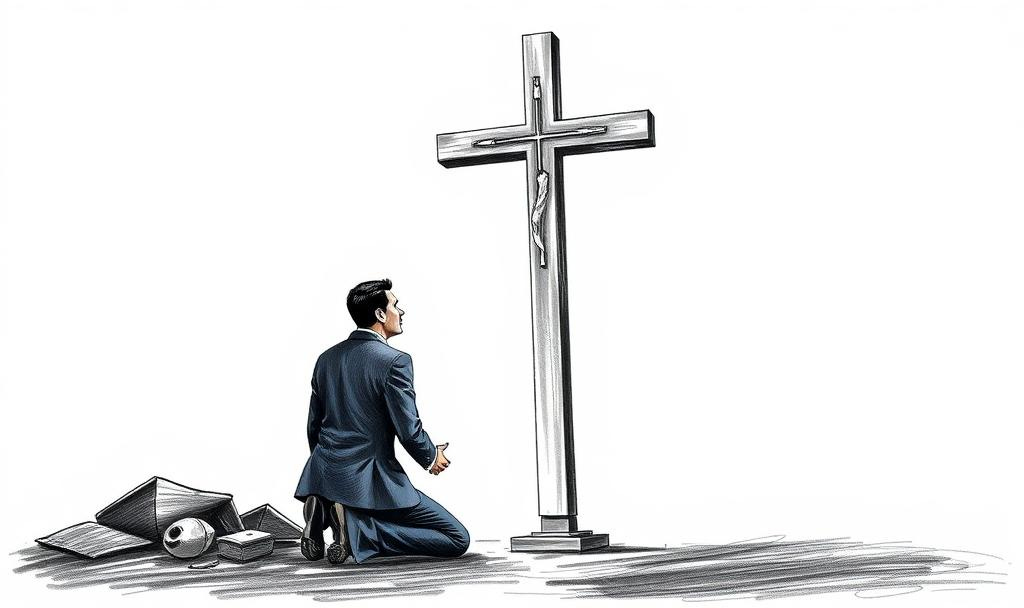
Have you ever been falsely accused or so badly hurt that you wanted to take revenge?
I think we can all answer that with an immediate yes. If you've stepped outside your front door and interacted with people, you've likely experienced betrayal, misunderstanding, or intentional harm.
Combat & Calling
I remember a time in Afghanistan during combat when one of our soldiers forgot to put a shipping address on a mortar tube. It was meant to go to another unit in the valley, but instead, it ended up at headquarters.
A first sergeant—who clearly had a selfish, possibly malicious agenda—told my commander that the enemy had stolen it and was going to use it to kill American troops. He planted seeds of lies in my commander’s heart, and it almost got me kicked out of the country.
I was the officer in charge, and it was technically my responsibility. I should’ve checked it. I should’ve verified it. Good officers live by the principle: “Trust, but verify.”
And yet, deep inside—because of my daily time with the Lord—I had peace. I felt like I was supposed to be there.
After a hard conversation with my commander (who admitted he wanted to demote me but ultimately did not), I returned to rejoin my men. I kept leading—not just in combat, but in the church we had built in the middle of the battlefield. I baptized three soldiers that deployment.
I knew in my spirit: this was spiritual warfare meant to silence my calling. But my relationship with the King of Kings was louder—much louder.
Had I run away or fought back in the flesh—slandering the first sergeant, playing the victim, or refusing responsibility—I may have missed the moments God had planned.
Moments to worship, to lead, and to point others to Jesus.
David’s Battle Before the Crown
David went through something even more intense.
Psalm 7 paints a picture of deep, personal slander. While it’s not confirmed, it’s likely that David was not yet king when he wrote this psalm. He had been anointed, but he was still facing spiritual and physical opposition trying to block the call of God on his life.
This is the kind of pressure that could destroy a lesser man.
But this is what sets David apart. This is why Scripture calls him a man after God’s own heart.
“Lord my God, I take refuge in you…
If I have done this and there is guilt on my hands,
let my enemy pursue and overtake me.”
— Psalm 7:1, 3–5
Instead of defending himself, David directed his fear, frustration, and anger toward God—and left it there.
He didn’t suppress his emotions or pretend he was fine. But he also didn’t take matters into his own hands.
He trusted God with his name, his future, and the outcome.
David knew that revenge wasn’t his job. He knew that high emotions often lead to poor decisions. But most of all, he knew his relationship with God was closer and more powerful than any earthly threat.
The shepherd boy was already exercising kingly wisdom—because the King of the universe was by his side.
And because of David’s choice to take refuge in God, he ends the psalm with this confident declaration of praise:
“I will give thanks to the Lord because of his righteousness;
I will sing the praises of the name of the Lord Most High.”
— Psalm 7:17
What a challenge. What a model of what to do when you're falsely accused.
You want to end your psalm with praise?
I know I do.
🔥 Never Finished Challenge: Write It Down and Leave It at His Feet
What accusation—internal or external—are you battling today?
Instead of trying to prove yourself right, bring it before God like David did.
Write it down.
Leave it at the throne.
Let your Father—the Creator of the universe, the sovereign King of kings—be your Defender.
You were not anointed to defend your own crown.
You were anointed to trust the One who gave it.
✍️ How to Write It Down — A Psalm 7 Framework
Step 1: Identify the Accusation or Battle
Psalm 7:1 — “O Lord my God, in You I take refuge; save and deliver me from all who pursue me.”
What lie, accusation, or pressure is pursuing you right now?
Is it coming from others? From within? From the enemy?
Prompt:
“I feel accused of…”
“There’s a voice telling me I’m…”
“This situation makes me feel like I’ve failed because…”
Step 2: Invite God to Search Your Heart
Psalm 7:3–5 — “If I have done this and there is guilt on my hands… then let my enemy overtake me.”
Is there any truth in the accusation that God wants to lovingly correct?
Are your hands clean in this—or is there a part God wants to refine?
Prompt:
“Search me, Lord. Show me if I’ve…”
“If I’m at fault, I surrender it to You and ask for Your mercy…”
Step 3: Let God Be Your Defender
Psalm 7:6–11 — “Let the Lord judge the peoples. Vindicate me, Lord…”
You don’t have to defend your name—God will.
Prompt:
“God, I release this to You. I trust You with the outcome…”
“I won’t fight this in my strength. I trust Your timing and justice…”
Step 4: Declare Your Trust and Identity
Psalm 7:17 — “I will give thanks to the Lord because of His righteousness…”
Worship shifts the weight.
Prompt:
“Because You are righteous, I am covered.”
“Because You are my Defender, I don’t have to live in fear.”
“Because You chose me, this does not define me.”
Bonus: Give Your Journal a Title
Give your entry a name like:
“The Battle for My Name”
“Accused, But Not Abandoned”
“My Defender Will Speak”
🙌 What does today tell me about God?
God is not intimidated by your emotions.
He doesn’t flinch at your frustration, your anger, or your direct cries for help.
He welcomes it.
He understands it.
And He still anoints you.
He saw all that David would do—both the good and the broken—and still entrusted him to lead a nation.
And He desires to give you and me the same peace, purpose, and presence.
How unconditionally generous.
How unconditionally loving.
How merciful.
How faithful.
Thank You, Jesus.